|
|
||
|
|
||
![]() |
||
![]() |
||
![]() |
||
![]() |
||
![]() |
||


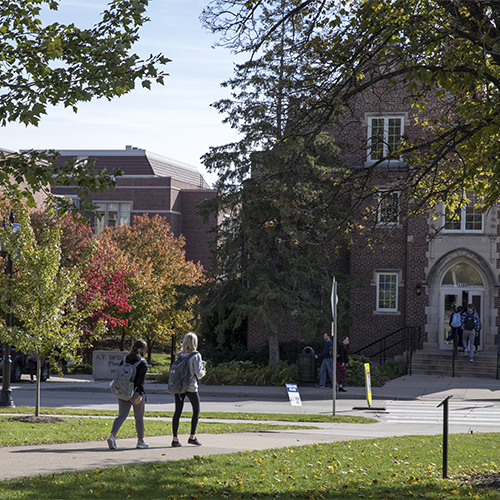
Joe Chlapaty with his
wife, Linda, in front of Mary Chlapaty Hall, named after his mother,
at the
University of Dubuque.
Photo Credit: Mike Burley, Telegraph Herald
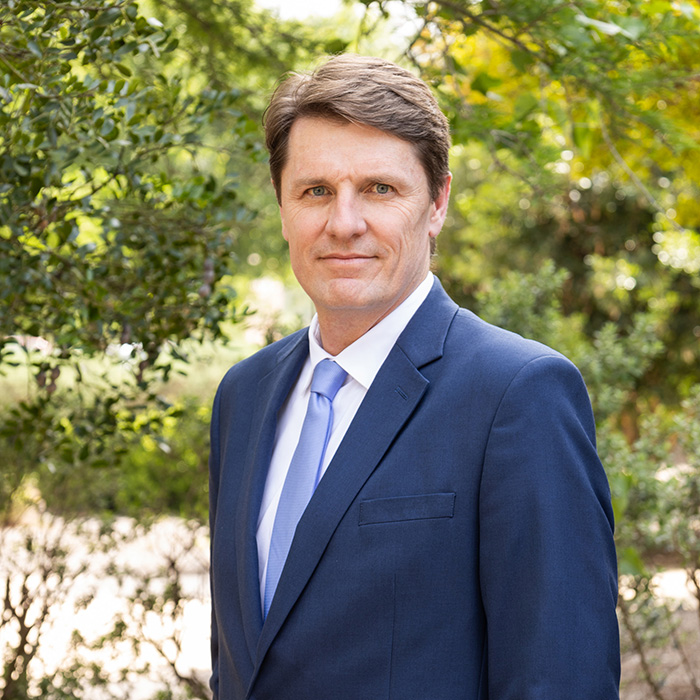
Joe Chlapaty: Philanthropist, business leader, university donor, family man and down-to-earth guy
Meet the man behind the University of Dubuque's renaissance
Dubuque Telegraph Herald - Sunday, May 13, 2012
If not for some disrespectful comments about Joe Chlapaty's alma mater nearly 45 years ago, there might not be a University of Dubuque today.
Working his first job after graduating from UD in 1968, Chlapaty encountered alumni of more prestigious institutions who were, to put it nicely, disrespectful of the school he and his family loved. He promised himself that, if he could, he would help raise the awareness of the University of Dubuque.
Chlapaty went on to a successful business career -- so successful that he has made good on that promise in record-setting proportions.
He and his wife, Linda, have donated about $70 million to UD. Their generosity has transformed the look of the campus, bolstered academic programs and positioned for the future a university that only a dozen years ago was on the brink of closure.
In addition to his financial commitment, Chlapaty contributes his leadership and expertise as a 20-year member of the university board of trustees. He has been chair of the trustees the past 10 years.
The TH recently visited with Chlapaty (pronounced CLAP-a-tee) concerning his history with the university, his generosity and his vision for UD's future. Here are edited highlights of the conversation.
How did it happen that you enrolled at
the University of Dubuque in 1964?
I played football and
basketball and baseball in high school, none of which you would have read much
about me, to be honest with you. But I wanted to play football in college. My
dad, who was a tool-and-die maker, was working with a gentleman whose son was a
student at UD. They suggested I come up and talk to the coach.
The guest accommodations were in Steffens Hall, on the third floor in bunk beds. I guess I took the top bunk and my dad took the bottom bunk, and that was our stay. I met several individuals and met the coach at that time, Owen Evans. The bottom line is I ended up coming here in the fall of 1964.
How would you describe your football
career at UD?
I was on the two-deep
chart.
Too deep to get into the game?
No, I earned a couple
of letters, played four years, started in a few games. But I was the third
tackle. I was a long snapper one year. I took some pride in that. But you know
what? I played with some good athletes. We had some good teams back then. Made
a lot of good friends.
I'll tell you a funny story. My freshman year, I'm on the football team. I'm not really playing much at all. It's the Homecoming game and we're warming up before the game and we're playing Central that day. We had a tremendous athlete here by the name of Dozier Jones. And we're going through these one-on-one drills before the game. Dozier's all pumped up and I've got to go through this drill and he hits me with a forearm. He literally breaks my wrist. I don't know it at the time, but I'm on the sidelines, sitting on the bench, thinking, "My God, man, this thing is sore." After the game, my folks were up here, we went out to dinner and my dad says, "You really ought to get that thing checked out." So I walk up to Finley and sure enough, Dozier broke my wrist. Luke Faber, a doctor in town here, puts kind of a half-cast on this thing. So when I'm done, he asks, "How did you break the wrist?" I said, "Well, I'm a football player at the University of Dubuque." He's asking me, "Well, what kind of a play did you hurt it on?" It was difficult for me to tell him I'm hurt in the pre-game warm-ups.
See, I could tell you I was a great athlete, but there's too many guys still living around here that would refute that, so I have to be honest. I was offensive tackle, I was a tackle. I was pretty offensive, too, but that's ...
What about off the football field?
What kind of student were you at UD?
I was a pretty good
student. I say that with humility, but that's the reality of it. I graduated
cum laude.
How difficult was it for your family
to send you to college?
My folks were the
paramount blue-collar ethnic savers. We lived in Roselle and my dad had bought
a couple of modest home sites, and one of them he sold to pay for my education.
Let me give you a feel for what education cost back in 1964. I think the gross tuition, room, board and fees was $1,600. I had a $300 scholarship, so it was $1,300. Each year after that, the tuition went up modestly, but so did my scholarship. In my junior and senior year, I was a residence hall adviser. I took that money to help my parents. Don't hold me to this figure because we're going back a long time. For the four years, it probably cost my folks a little over $4,000 to send me to college. But I worked the summers in industrial situations. I paid for all of my incidentals. I paid for my books.
As a trustee, to what degree are you
concerned about the cost of higher education today?
Significantly. And we
constantly think about it at the university and ways in which we can assist
students in keeping that cost down. It's a challenge for private higher
education because we get no state funding. It's a challenge. But we recognize
it and we're doing everything we can to try to increase our endowment to help
offset the cost of education and think of other opportunities students can have
to work on campus or in the city to help defray that cost. It's a concern; it
really is.
When you were a student, is there
someone you considered a mentor, or someone who influenced you?
I was raised in
somewhat of a typical Chicago ethnic blue-collar family. A modest but humble,
clean-cut family, Eastern European, Catholic, blue-collar. I was a first
generation college student. My dad claims to have gotten to the ninth grade.
I'll give him that, whether he did or not. But that's not a knock on him. He
was a kid of the Depression. He was one of five children, whose mother died
from cancer in 1930. The Depression hits and for these families to survive, kids
had to go to work. And so he did. Through a variety of programs and
apprenticeship he became a tool-and-die maker -- a good one -- for the rest of
his career.
When I came here, I was exposed to a wide range of backgrounds, and that experience, along with the academic one, was so important.
Back in 1964, Dubuque really was kind of on the forefront of diversity. It had a meaningful black student enrollment on campus. I was a fraternity member, and I think we had five, six, seven African-Americans in that group. So I was exposed to kids from out East who were from well-to-do backgrounds. There were kids like myself who were from modest backgrounds. There was racial diversity.
You know, you rarely think about those things until later on in life in terms of how it formulated your thinking.
But the thing here was that the people were so good, loyal, humble and dedicated. I'm talking about the faculty that received modest compensation. I can think about the woman that cleaned the dormitory I lived in my freshman year, her name was Jeannie. I couldn't tell you her last name. She invited a bunch of us over to her house for dinner on a Sunday night. This is what I'm talking about. These were wonderful people. The school didn't have much in the way of financial resources, but they were just good, dedicated, loyal people. People that were making a difference in a very quiet way. And that really stuck with me over the course of time.
People say, "Why do you have this passion for the University of Dubuque?" I graduated in May of 1968. I had a job offer from Arthur Andersen, which at that time was a pre-eminent accounting firm. I went to work for them.
The first thing they did was send you to their staff office home training school. Early on, you had to go around your group and talk about where you went to school. I'm there with people from much more prominent schools. They came to me and said, "Where are you from?" I said, "The University of Dubuque." You could see this look from them -- kind of, "Where? Who? What?" And it just stuck with me. It got me mad. I said to myself, "Damn it, some day if I could ever right that, I'm going to do it." Maybe that's a little melodramatic, but ... No one knew Dubuque or the University of Dubuque.
About 1973, I went to work for a small publicly held heat-treating company by the name of Lindberg Corp., which had plants across the country. I worked for a gentleman by the name of Frank Waldeck, who was my mentor. He was a Notre Dame grad. He taught me so many things. It's hard to describe when you have someone who kind of helps you out. He would take me to bank meetings, not because I added anything to the meeting, but just to help me out and train me.
In 1980, I was recruited to come down to Columbus, Ohio, and join ADS (Advanced Drainage Systems) as their chief financial officer. I worked with another guy named Frank. Frank Eck. And he also graduated from Notre Dame. This guy lived, breathed Blue and Gold. If you go back to the Notre Dame campus, you'll see his name in a lot of areas. The baseball stadium. The law school. The engineering scholarships.
The rest is history. When I joined the company in 1980, our sales were about $55 million, today they're $1.1 billion. There was just kind of that progression of what happened. I've had a tremendous career.
I understand that you have about 3,400
employees at ADS, at 76 facilities. And I hear that not one of them pays for
their health insurance.
At the present time,
that's correct. We've always had a paternalistic attitude towards our people.
It started with the guy who founded the company. People ask me, "Why are
you still working at the age of 66?" We have had so many contributions by
so many people since we were founded in 1967. We have a great culture.
Let me tell you something that's really odd. America has jobs going overseas. One of the things about ADS: I believe we have great prospects for continued growth because of what we represent in terms of the infrastructure needs of our country. Where we benefit -- not because of great strategy or design -- is you can't make pipe in China and ship it here and compete. So we have two oceans, either side of our coasts, that allows us to produce and compete in our country and provide the type of benefits and pay that we believe is necessary to have a reasonable standard of living. We live in a global economy, so does that always happen everywhere? Not necessarily, but as long as we have that unique niche, we're going to ride that horse as long as we can.
We are one of the few manufacturing companies in the Midwest that still offers an opportunity for somebody to come out of high school, join us and work their way up to a reasonable manufacturing position without having to go to college and yet have an opportunity to have his family protected with medical care and have a retirement benefit to recognize what he's accomplished during his length of stay with the company.
I take that very seriously. I won't retire until I can be convinced that there's someone who's going to replace me that has that same value.
I hear that shows up in your
management style and your accessibility to employees.
I visit every plant
in our company every year. We have plants in Hampton, Iowa; Oelwein, Iowa;
Eagle Grove, Iowa. I will get to every one of those facilities this year. We'll
sit down, we'll talk, we'll cook out. Our people work hard. We have good, clean
plants, but you have to understand that the process involves a lot of physical
labor in terms of heat, working with inventory, working in the dead of winter,
working in summer. I just try to avoid the south plants in the summer. Other
than that, we get around to them all.
Regarding UD's turmoil and problems of
the late '90s: How much did that weigh on you personally?
Significantly.
Because I had this pride factor. I didn't want the school to go under. This was
when John Agria was president. And John was a good person, but we were just
going through a difficult period. And the decision was made to make a change,
and Bruce Meriwether came in (in 1996) after retiring as president of First
National Bank. It was a very difficult time.
I remember one meeting. It got pretty boisterous. Somebody said, "Maybe we should just take the keys and hand them over to the state and say, "Hey, open up the Northeast Iowa campus of whatever." But obviously we didn't do that.
But here's a key story. We were so desperate at that point to keep the place financially viable. We had a board of trustees meeting. I'm not going to name names, but there was a proposition at that time to sell off a significant portion of our south campus along Highway 20 because they wanted to build -- I think it was a Walmart -- for a modest sum of money, maybe 400 grand. I said, "Wait a minute. If we're going to sell off our heritage and our future for 400 grand ... This is crazy."
And I'm going to bring up one name. One guy who supported me in terms of not doing that was John Butler. John and I very vocally opposed that situation, and we beat that suggestion down. That was a key turning point in the school's history. I am so indebted to John Butler for the leadership that he demonstrated in working with me and not allowing that to happen. I'm telling you that was a turning point in the school's history.
From there, things started ... Jeff Bullock took over (in 1998), several tumultuous years, we had to scale back the number of majors, and from there, it's been a steady climb upward.
From my own perspective, just to be honest with you, things were going well with ADS. I became president of the company in 1994 and then was made CEO in 2004. The company continued to do well, which provided the financial means for me to support the institution. It's been a passion for me.
I love this town. This is a wonderful town. This school was so important to my parents. My mom and dad loved coming up to Dubuque. My mom loved shopping at Roshek's. Oh, my gosh. It was a big deal to go shopping at Roshek's.
At the University of Dubuque, we have a history of not generating people of high stature -- they are teachers, ministers, people going out and making a difference in the world. They don't have the financial means to pay back, but are making a difference in the world. That has stuck with me that whole time.
Do you remember what your first gift
to the university was?
Oh ... probably 50
bucks, I'm guessing. I'd give every year since I graduated. I'll say $50 and
I'm not even sure they would even have the records in the development office,
but it was probably something like that.
How would you say philanthropy has
changed your life?
You know what it is? I
feel like sometimes my wife and I have been so fortunate. I'm married to a
wonderful woman, we have great children, and she has supported me over the
course of time and quite honestly, things have gone so well at ADS, I feel like
that movie "Camelot," where King Arthur said, "I stuck my sword
in the stone and whoever pulls it out is going to become king." I pulled
on it and someone says, "Hail to the King." Things just kind of
happened. I would love to tell you it was through arduous strategic direction and
planning. I was in the right place at the right time. I worked hard. I did what
I had to do, but certainly good fortune played a significant role in it. And
for me to deny that would be foolish.
And so as things have turned out well, and I've been able to help the university. Every time I've given a gift, it's kind of like things keep going well, it's like, "Wow, I can do more now ... It's kind of like I cut the alfalfa down and it's growing up again.
I went through some of our articles
and the best I could piece together -- at least of the major gifts, not
counting the $50 in the early years -- it's about $72 million?
You're probably
close. I don't know. Whatever it is, it is. We haven't kept track of it.
You say that people often ask you,
"Why do you give so much to Dubuque?"
I'm around people
that spend huge amounts of money generational planning. They say, "I'm
going to get my estate plan in place so my grandchildren, great-grandchildren
..." Who knows what's going to happen 150 years from now? Some despot
could come in place and change the whole thing in a heartbeat. I want to do
things now that I hope can provide the values for future generations that
provide the strengths and the values that this country had 50 years ago,
currently and hopefully in the future. My wife and I have provided for our kids
and our grandchildren, but beyond that, do you have to have huge sums of money?
I had no idea there was that much
money to be made in drainage pipe.
(Laughs) Neither did
I! We are the world's largest producer of corrugated plastic pipe. I work with
wonderful people, I'm telling you.
What's happened to me is not just because of me. I work with absolutely wonderful people who day-to-day are doing things -- the responsibility I feel that there may be 3,400 people in our company, you take their dependents and spouses, there's probably 10,000 people that are impacted day-to-day by the decisions that I make. I don't take that lightly.
I came across an article from about
five years ago where there's some conversation about a minor league ballpark
...
You know what? I was
naive. I said, "I'm going to buy a minor league baseball team and move it
to Dubuque." It's not that easy.
There aren't that many available.
Well, first of all, I
can't buy a team out of the league in the Carolinas or wherever and just move
it here. The Midwest League controls what can happen. So for me to bring what I
would call Major League Baseball affiliation to Dubuque necessitates that I
find some team eventually that's available within the Midwest League that I can
relocate here. The best chance this town had was when what's-his-name ...
Michael Gartner ...
... wanted to do it.
I haven't given up on the idea and at some point maybe we've got to grow a
Pioneer League. As I near retirement, that still is a focus I would love to
have happen. It's a dream. But here's something I would like to do. I would
like to take a first step towards bringing baseball to Dubuque, and that's
through a Miracle League. That is a program where they build facilities for
kids who have physical and mental disabilities. And they build fields so these
kids can experience baseball. I would love to partner with the city and with
some other folks in bringing a Miracle League team to Dubuque as a first step
to perhaps doing something more.
You're also still involved in Marietta
College, as a trustee?
My oldest son went to
Marietta and had a great experience there. We've supported them.
But more importantly, in Columbus, we're very close to Nationwide Children's Hospital, which was a key philanthropy that we're involved with, along with, I would say, some traditional philanthropic efforts with our church, with Lutheran Social Services. But these are efforts that really help, when I say day-to-day things, food pantries and day-to-day needs of our community.
I also heard about a charter school.
Yes, KIPP. KIPP
Journey Academy. (Knowledge Is Power Program). I'm telling you a wonderful,
wonderful program in Columbus that I'm involved with. We are in inner-city
areas establishing charter schools all the way from elementary to middle to
high school to take kids who are from very difficult backgrounds, and the goal
is to get them through college. I had a group of them up here last fall.
I heard something about that.
Linda was part of that.
We brought 12 kids up here last October for the Central football game and we
beat the crap out of them (Central). Excuse my French. I'm involved in that
program. We're strong supporters of it.
Linda and I are not politicians. We're not at either end of the political spectrum. We try to avoid politics. I don't make political contributions, because -- you know what? -- the money is better off going to some charity that needs it than all the money that's being raised today for all these bizarre political elections. We're not progressives, we're not ultra-conservatives, we're just kind of moderates. We just want things to be good.
We've lived a good life together. It's for our kids and our grandkids and future generations. That sounds altruistic, but it's true. I mean at some point, you have to take a look and say, there's fewer years ahead of us than there are behind us. What are we going to do with our legacy that makes a difference?
What is your vision for the University
of Dubuque?
You know, we've done
a lot. I've got some other thoughts on my mind. We need student housing. We
need some other facilities. We need to do some things for the seminary.
I want to make this point to you before this conversation ends: We are not in competition with Loras and Clarke. Loras and Clarke are two wonderful schools. I was born Catholic and raised Catholic. I mean there is no, from my perspective, competition or animosity towards either of those institutions. I want them to be successful. They're great schools.
If I have one frustration -- how can we work together to promote more collaboration to reduce the cost of higher education together? Those are good schools with good people. I've known people over the years from them, and I want them to be successful. And I mean that with sincerity.
More Information...
Joseph Chlapaty Age:
66 Residence: Dublin, Ohio. Hometown: Born in Chicago and raised in Roselle,
Ill. Family: Wife Linda, four sons and five grandchildren (with a sixth on the
way). One sister. Parents Hans and Mary Chlapaty are deceased. Education: Lake
Park High School, Roselle (1964). University of Dubuque, bachelor's degree in
accounting (1968). De Paul University, master's in business administration
(1976). The University of Dubuque presented him an honorary Doctor of Humane
Letters degree in 1998. Business: Advanced Drainage Systems, Inc. since 1980;
currently CEO and chairman of the board. ADS is the nation's leading
manufacturer of corrugated plastic drainage pipe. Previous positions were with
Arthur Andersen and Lindberg Corporation. University of Dubuque leadership:
Trustee since 1992, board of trustees chair since 2002 and chair of the board's
executive committee. Other leadership roles: director, Fifth Third Bank of
Columbus of Central Ohio; member of the Ohio Foundation of Independent Colleges
Board of Trustees; director of Nationwide Children's Hospital in Columbus;
director of the KIPP Journey Academy; trustee, Marietta College; former board
member, Lutheran Social Services. Military service: U.S. Army Reserve.
This article is posted with permission from the Dubuque Telegraph Herald (TH). Further publication of this copyrighted material is prohibited without permission of the TH.
View 2012 UD Commencement
View 2012 ROTC Commissioning Ceremony
View 2012 Nurses Pinning Ceremony