


Master of Science in Medical Science
Prepare for a Career in Healthcare - Rigorously, Professionally, and in Service of Community Health
The Master of Science in Medical Science (MSMS) program at the University of Dubuque prepares you for medical school and other health professions programs, research, and health policy careers. A year of graduate-level biomedical coursework taught by faculty, professionalism training, and a community-engaged research project with local partners. You’ll master the anatomy, biochemistry, and research literacy that professional health programs expect, applied in real community health contexts.
Rigorous science, grounded in community
Your coursework isn't abstract. Every concept connects to real health issues. Together, these prepare you to be a health professional who understands both why disease occurs and what systems prevent it.
Biomedical sciences
Physiology, human morphology (anatomy), cell biology, biochemistry, immunology, and pharmacology at the graduate level.
Social determinants of health research
How social systems, economic resources, neighborhoods, and community supports shape health outcomes.
Professional skills
Professional identity formation, character, and leadership.
Admission Information
Academic Requirements
Grade point average
A preferred minimum cumulative GPA of 2.5 on a 4.0 scale.
Recommended coursework
Physiology, Cellular and Molecular Biology, and Biochemistry are recommended to be fully prepared for MSMS coursework.
Required prerequisite coursework
Each of the following must be completed with a grade of "C-" or better.
| Course | Semester credit hours |
|---|---|
| Biology with Lab | 8 |
| General Chemistry with Lab | 8 |
| Organic Chemistry with Lab | 8 |
| Physics with Lab | 8 |
| Psychology or Sociology | 3 |
If you completed courses on the quarter system, please use a calculator like this to determine your semester hours.
Admission Requirements
- Meet academic requirements
- Complete an interview.
Admission Process
- Apply via PostbacCAS
- Select applicants will be invited to interview starting in December.
- Students will be notified of the admissions committee decision approximately four weeks following interview.
Curriculum
Courses by term
Courses within a term run at the same time.
Fall Term
| Course | Credits |
|---|---|
| Medical Physiology I Explore how cellular, neural, and endocrine control systems maintain human homeostasis, and how disruption of these mechanisms leads to disease. |
3 |
| Human Morphology Across the Lifespan I Integrate gross anatomy and histology to trace human structural development from birth through adolescence, and see how disrupted development leads to clinical vulnerability. |
3 |
| Cell Biology Examine gene expression, cell signaling, membrane dynamics, and metabolic regulation, and connect molecular mechanisms to human health and disease. |
3 |
| Medical Biochemistry Master the metabolic pathways, enzyme regulation, and molecular signaling that drive human health, and learn how biochemical dysfunction causes disease and guides treatment. |
3 |
| Seminar I: Foundations of Community Engagement Through hands-on work with community organizations, students build their professional identity, examine social determinants of health and barriers to care, and develop skills in cultural humility, interprofessional collaboration, and communicating science to diverse audiences. |
1 |
Spring Term
| Course | Credits |
|---|---|
| Medical Physiology II Study how the major organ systems work together as coordinated units, and how breakdowns in that integration produce complex, multi-system disease. |
3 |
| Human Morphology Across the Lifespan II Integrate gross anatomy and histology to examine how the adult body maintains its structure, and how aging-related changes affect function and contribute to disease. |
3 |
| Medical Immunology Investigate innate and adaptive immunity, immune regulation, and immune dysfunction, and connect immunological mechanisms to clinical presentation, diagnosis, and treatment. |
3 |
| Pharmacology Learn how drugs act in the body through pharmacokinetic and pharmacodynamic principles, and how those principles guide safe, effective therapeutic decisions. |
3 |
| Advanced Topics in Biomedical Science Explore a specialized, rotating topic in biomedical science (Neuroscience, Microbiology, Toxicology, etc) through current research, and emerging discoveries, while building advanced skills in critically evaluating the literature and applying findings to clinical and population health. |
3 |
| Seminar II: Community-Based Research Students turn community-identified health priorities into researchable questions and design ethical, feasible research and program evaluations with community partners to address health disparities. |
1 |
Summer Session I
| Course | Credits |
|---|---|
| Seminar III: Community Research Capstone Students carry out a community-based research project from start to finish: they implement it, collect and analyze data, evaluate outcomes, and present their findings as scholarship, while also articulating the professional identity and competencies they’ve built for the next step in their health professions careers. |
3 |
This 10-month program runs from late August to the beginning of June.
Coursework and research, one integrated year
Research isn't an add-on to your classes. Community engagement starts in your first term, research design builds from there, and your capstone brings it together at the end of the year.
The science you learn informs the questions your group asks, and the questions your community partners care about give that science a reason to matter.
What this program doesn't include: clinical skills training or clinical assessment. The focus is biomedical science and research.
Capstone Project
Research that matters
In small groups, you'll participate in a professionally supervised study on social determinants of health with a Dubuque community partner. You'll finish the year with an impactful community-based research project.
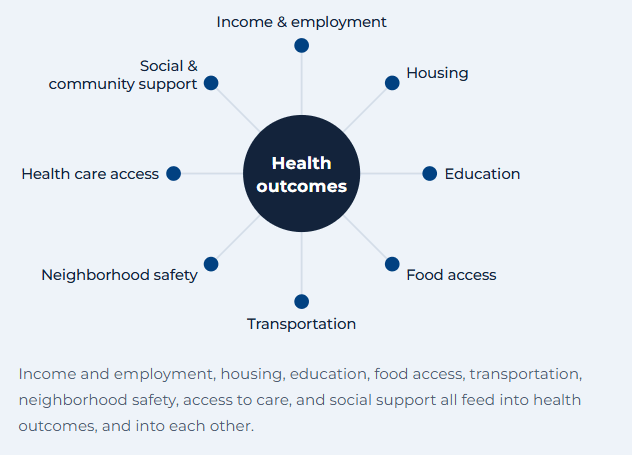
Social determinants of health are the social, economic, and environmental conditions that shape health outcomes: where people live, what they earn, what they can eat, how they get around, and who they can count on.
Your capstone asks how those conditions affect health in a real community, and what supports make a difference.
Our community partners
Our partners include the local health department, brain-health organizations, and grassroots community groups.
- Dubuque County Health Department
- Hillcrest Family Services
- Stonehill Communities
- St. Mark Youth Enrichment
- Fountain of Youth
With more partners joining.
Contact the Program Director
Sarah Cassella, PhD
Director of the Master of Science in Medical Science program
scassella@dbq.edu